Loose Skin After Weight Loss: Causes, Treatment Options, and When Surgery May Be Considered
Loose skin after weight loss is common. Discover why it happens, which areas are affected, and the treatment options available for firmer skin.
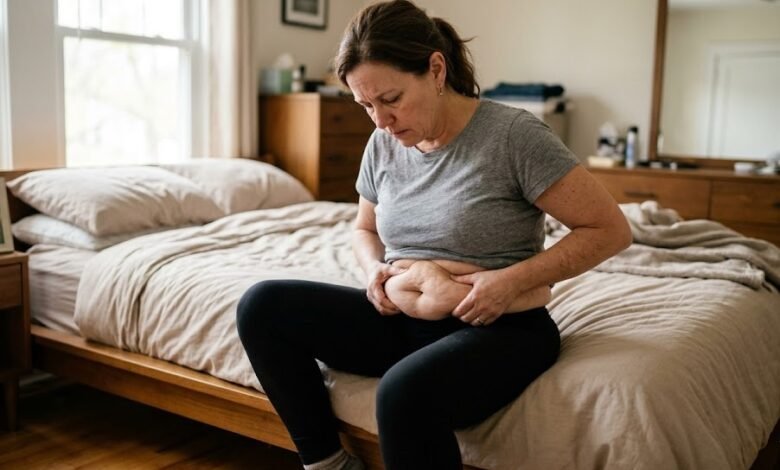
Losing weight is a major achievement that can improve overall health, mobility, and confidence. However, many people are surprised to discover that reaching their target weight does not always mean achieving the body shape they expected. One of the most common concerns after significant weight loss is Loose Skin After Weight Loss.
Loose or sagging skin can affect different areas of the body, including the abdomen, thighs, arms, buttocks, breasts, and neck. While it is completely normal, many people wonder why it happens and what treatment options are available.
This guide explains the causes of loose skin, available treatments, and when surgery may be considered.
Understanding Loose Skin After Weight Loss
The skin is the body’s largest organ and is designed to stretch and adapt to changes in body size. It contains important proteins such as collagen and elastin, which give the skin its strength, flexibility, and ability to return to its original shape.
When a person gains weight, the skin stretches gradually to accommodate the increase in body fat. If this stretching continues for many years, the collagen and elastin fibers can become damaged or weakened. Once the excess fat is lost, the skin may not fully contract back to its previous form, resulting in loose or sagging tissue.
The severity of Loose Skin After Weight Loss varies from person to person. Some individuals experience only mild laxity, while others may have large folds of excess skin that affect their daily activities.


Why Does Loose Skin Happen?
Several factors influence how much loose skin develops after weight loss.
Amount of Weight Lost
People who lose a significant amount of weight, especially more than 50 to 100 pounds, are more likely to develop excess skin. The greater the weight loss, the more stretched the skin may have been.
Age
As people age, natural collagen production declines. Younger skin tends to have better elasticity and may recover more effectively, while older skin often loses some of its ability to tighten naturally.
Duration of Obesity
The length of time someone carried excess weight also matters. Skin that has remained stretched for many years usually has a harder time shrinking after weight loss.
Genetics
Genetics influences skin quality and elasticity. Some individuals naturally have more resilient skin than others.
Smoking
Smoking damages collagen and elastin fibers, accelerating skin aging and reducing the skin’s ability to recover.
Sun Exposure
Long-term exposure to ultraviolet rays contributes to collagen breakdown and can make loose skin more noticeable.
Speed of Weight Loss
Rapid weight loss does not necessarily cause loose skin, but when weight is lost very quickly, the skin may have less time to adapt to the body’s changing shape.
Areas Commonly Affected by Loose Skin
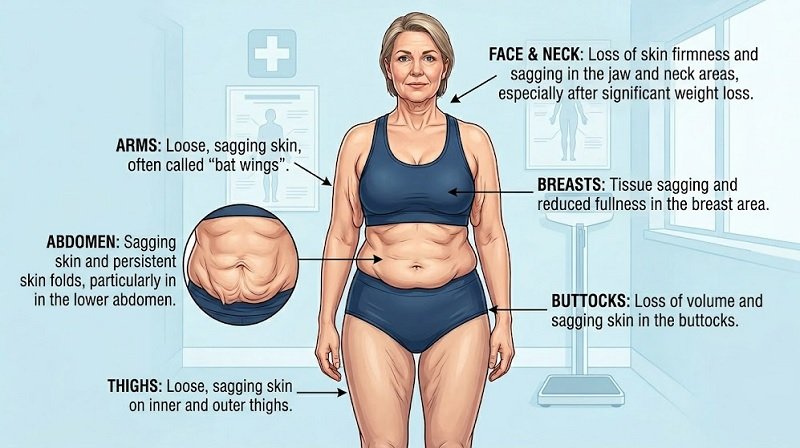
Excess skin can develop in multiple areas of the body.
Abdomen: The stomach is one of the most common regions affected after weight loss. Many people notice hanging skin or persistent folds around the lower abdomen.
Upper Arms: Loose skin in the upper arms, often called “bat wings,” can become more noticeable after fat reduction.
Thighs: Sagging skin on the inner or outer thighs may create discomfort and affect clothing choices.
Buttocks: Weight loss can lead not only to loose skin but also to volume loss in the buttocks, making the area appear flatter.
Breasts: Both men and women may experience sagging tissue and a loss of fullness in the chest area.
Face and Neck: Significant weight loss sometimes causes the face and neck to appear less firm due to reduced fat volume.
Can Loose Skin Tighten Naturally?
Many people hope that their skin will gradually tighten on its own. In some situations, natural improvement is possible.
Individuals who:
- Lose a moderate amount of weight.
- Are relatively young.
- Have good skin elasticity.
- Maintain a healthy lifestyle.
may experience some degree of skin tightening over time.
However, excess skin that developed after massive weight loss usually does not disappear completely without medical treatment. While healthy habits can improve skin quality, they cannot remove large amounts of redundant skin.
Does Exercise Help Loose Skin?
Exercise is an important part of maintaining overall health and preserving weight loss, but it cannot directly eliminate loose skin.
Nevertheless, strength training offers several benefits.
Building Muscle Can Improve Body Shape
Increasing muscle mass can provide support beneath the skin and create a firmer appearance.
Resistance training may help:
- Improve body contour.
- Increase muscle tone.
- Enhance physical strength.
- Support long-term weight maintenance.
Although exercise cannot replace surgical skin removal, it often contributes to a more balanced and attractive appearance.
Nutritional Support for Healthy Skin
Nutrition plays an important role in maintaining skin health.
Protein
Collagen production depends heavily on adequate protein intake. Lean meats, fish, eggs, legumes, and dairy products are valuable sources.
Vitamin C
Vitamin C contributes to collagen synthesis and supports tissue repair.
Foods rich in vitamin C include:
- Oranges.
- Strawberries.
- Bell peppers.
- Kiwi.
- Broccoli.
Healthy Fats
Omega-3 fatty acids may support skin hydration and elasticity.
Sources include:
- Salmon.
- Sardines.
- Walnuts.
- Flaxseeds.
Hydration
Proper hydration helps maintain skin quality and overall tissue function.
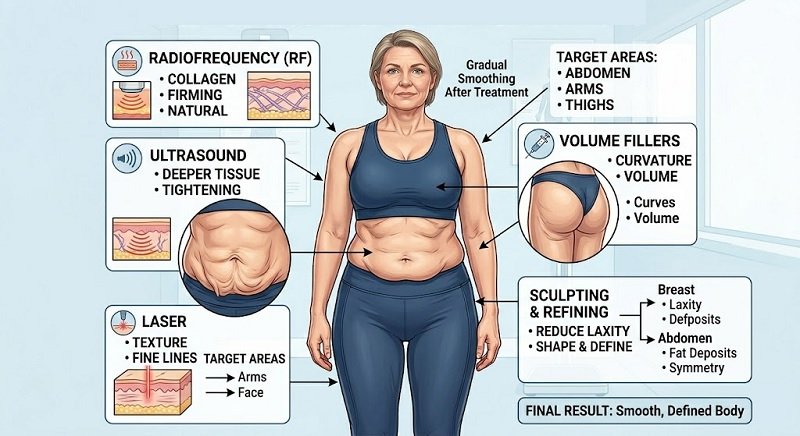
Non-Surgical Treatments for Loose Skin After Weight Loss
Not everyone requires surgery. For mild to moderate skin laxity, several non-invasive procedures may provide noticeable improvements.
Radiofrequency Skin Tightening
Radiofrequency treatments use heat energy to stimulate collagen production within deeper layers of the skin.
Benefits include:
- Minimal downtime.
- Gradual improvement.
- Increased skin firmness.
- Natural-looking results.
These treatments are often most effective for mild sagging.
Ultrasound-Based Skin Tightening
Ultrasound technology targets deeper tissues and encourages collagen remodeling over time.
Many patients appreciate these procedures because they involve little recovery time and can produce gradual tightening effects.
Laser Treatments
Laser-based procedures promote collagen formation and improve skin texture.
They may help:
- Reduce fine lines.
- Enhance elasticity.
- Improve overall skin quality.
However, laser treatments are generally not sufficient for severe skin excess.
Body Contouring After Weight Loss
Body contouring refers to procedures designed to reshape and refine the body after major weight changes.
These treatments can address:
- Skin laxity.
- Residual fat deposits.
- Loss of volume.
- Body asymmetry.
The goal is not simply weight reduction but creating smoother, more harmonious body proportions.
Modern body contouring treatments may be surgical or non-surgical depending on the individual’s needs.
Restoring Volume with Fillers
Weight loss can sometimes leave certain areas looking flat or lacking volume.
Injectable fillers have become increasingly popular for restoring contour and improving proportions.
They may be used to:
- Enhance body curves.
- Address volume loss.
- Create smoother transitions between body areas.
For individuals interested in non-surgical enhancement, many patients explore Butt Fillers in Dubai to restore fullness and achieve a more balanced silhouette without undergoing traditional surgery.
When Should Surgery Be Considered?
Surgery may be appropriate when excess skin becomes severe or interferes with daily life.
Patients often consider surgery when:
- Skin folds cause irritation or rashes.
- Hygiene becomes difficult.
- Physical activity is uncomfortable.
- Clothing no longer fits properly.
- Loose skin affects self-confidence.
- Body contour remains unsatisfactory despite exercise.
Most surgeons recommend maintaining a stable weight for several months before undergoing body contouring surgery.
Tummy Tuck (Abdominoplasty)
A tummy tuck is among the most commonly performed procedures after major weight loss.
During this surgery, excess skin and fat are removed, and weakened abdominal muscles may also be repaired.
Benefits include:
- A flatter abdomen.
- Improved body contour.
- Better posture in some patients.
- Reduced skin irritation.
- Enhanced confidence.
A tummy tuck is particularly beneficial for individuals who have large amounts of loose skin around the stomach.
Lower Body Lift
Massive weight loss can affect multiple areas simultaneously.
A lower body lift addresses:
- Abdomen.
- Waist.
- Lower back.
- Hips.
- Buttocks.
This comprehensive procedure helps create smoother and more balanced contours throughout the lower body.
Arm Lift Surgery
An arm lift, also known as brachioplasty, removes excess skin from the upper arms.
Patients often choose this procedure when:
- Loose skin remains despite exercise.
- Clothing fits poorly.
- The appearance of the arms causes self-consciousness.
The procedure can significantly improve arm definition.
Thigh Lift Surgery
Loose skin around the thighs may cause friction and discomfort.
A thigh lift removes excess tissue and creates a firmer, more sculpted appearance.
This procedure is especially popular among people who have undergone dramatic weight loss.
Breast Lift and Breast Enhancement
Weight loss frequently leads to loss of breast volume and skin elasticity.
Depending on individual goals, treatment options may include:
- Breast lift surgery.
- Breast implants.
- Fat transfer procedures.
- Combination treatments.
These procedures aim to restore shape and improve overall body balance.
Emotional Effects of Loose Skin After Weight Loss
The emotional impact of excess skin is often underestimated.
Many people expect to feel completely satisfied after reaching their weight goals. Instead, they may experience mixed emotions when loose skin prevents them from seeing the results they imagined.
Some individuals struggle with:
- Reduced confidence.
- Frustration.
- Anxiety about appearance.
- Social discomfort.
- Difficulty enjoying their weight-loss achievements.
These feelings are common and understandable. Addressing body contour concerns can sometimes help patients feel that their physical transformation is finally complete.
Choosing the Right Treatment Plan
There is no universal solution for Loose Skin After Weight Loss.
The best treatment depends on factors such as:
- Age.
- Skin quality.
- Overall health.
- Weight stability.
- Desired results.
- Amount of excess skin.
- Lifestyle expectations.
A thorough consultation with an experienced medical professional is essential to determine the most suitable approach.
Personalized Solutions at Tinkermoon Clinic
Individuals seeking advanced aesthetic treatments in Dubai often turn to Tinkermoon Clinic for personalized care and modern body contouring solutions.
The clinic offers a range of treatments designed to help patients improve their appearance following weight loss. Depending on individual concerns, specialists may recommend non-surgical skin tightening procedures, body contouring treatments, volume restoration techniques, or surgical consultations when appropriate.
By focusing on personalized treatment plans and natural-looking results, Tinkermoon Clinic aims to help patients achieve body proportions that align with their goals and lifestyle.
Final Thoughts
Experiencing Loose Skin After Weight Loss is extremely common, especially after significant weight reduction. While lifestyle habits and non-surgical treatments may help improve skin quality, some people require body contouring surgery to achieve their desired results.
Whether the concern involves the abdomen, arms, thighs, or buttocks, modern aesthetic treatments offer numerous options. Consulting experienced professionals and maintaining realistic expectations are key steps toward achieving a natural and balanced outcome.